Introduction
A reference architecture for AWS networking best practices.
Enterprise AWS networks are built on five interconnected pillars:
- Foundation - Core infrastructure build using AWS Organizations, Amazon VPCs, subnets, Amazon VPC IP Address Manager that everything else depends on
- Connectivity - Communication through internet gateways, AWS Transit Gateway, AWS Direct Connect, and VPN services
- Application Networking - Traffic distribution via Elastic Load Balancing, service-to-service communication through Amazon VPC Lattice, and container networking
- Security - Protection & network isolation through AWS Network Firewall, AWS PrivateLink, Amazon Route 53 Resolver DNS Firewall
- Observability - Monitoring and troubleshooting capabilities across all services
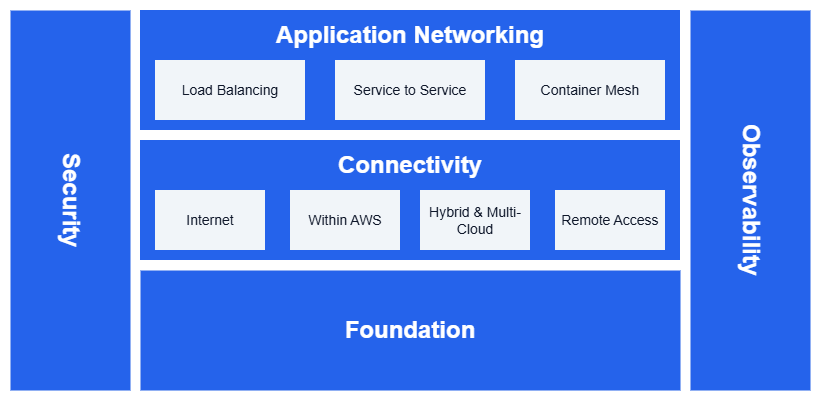
AWS Network Reference Architecture
Getting started
If you know what you're trying to accomplish, start with the Decision Map — it maps common AWS networking questions directly to recommended services, patterns, and trade-offs.
Or, start with Foundation to understand the basics and then explore each pillar based on your specific networking requirements.
-
Foundation
Essential AWS networking concepts including VPCs, subnets, routing, and core infrastructure components.
-
Connectivity
Internet access, connectivity within AWS, and hybrid & multi-cloud networking solutions.
-
Application Networking
Load balancing, service-to-service communication, and container mesh networking for modern applications.
-
Security
Secure your AWS network with defense-in-depth strategies, access controls, and threat protection.
-
Observability
Monitor network performance, troubleshoot connectivity issues, and gain visibility into your AWS network.
Contribute
Help improve this guide by reporting issues, suggesting new best practices, or contributing content. Join our community-driven effort to create comprehensive AWS networking resources for everyone.